
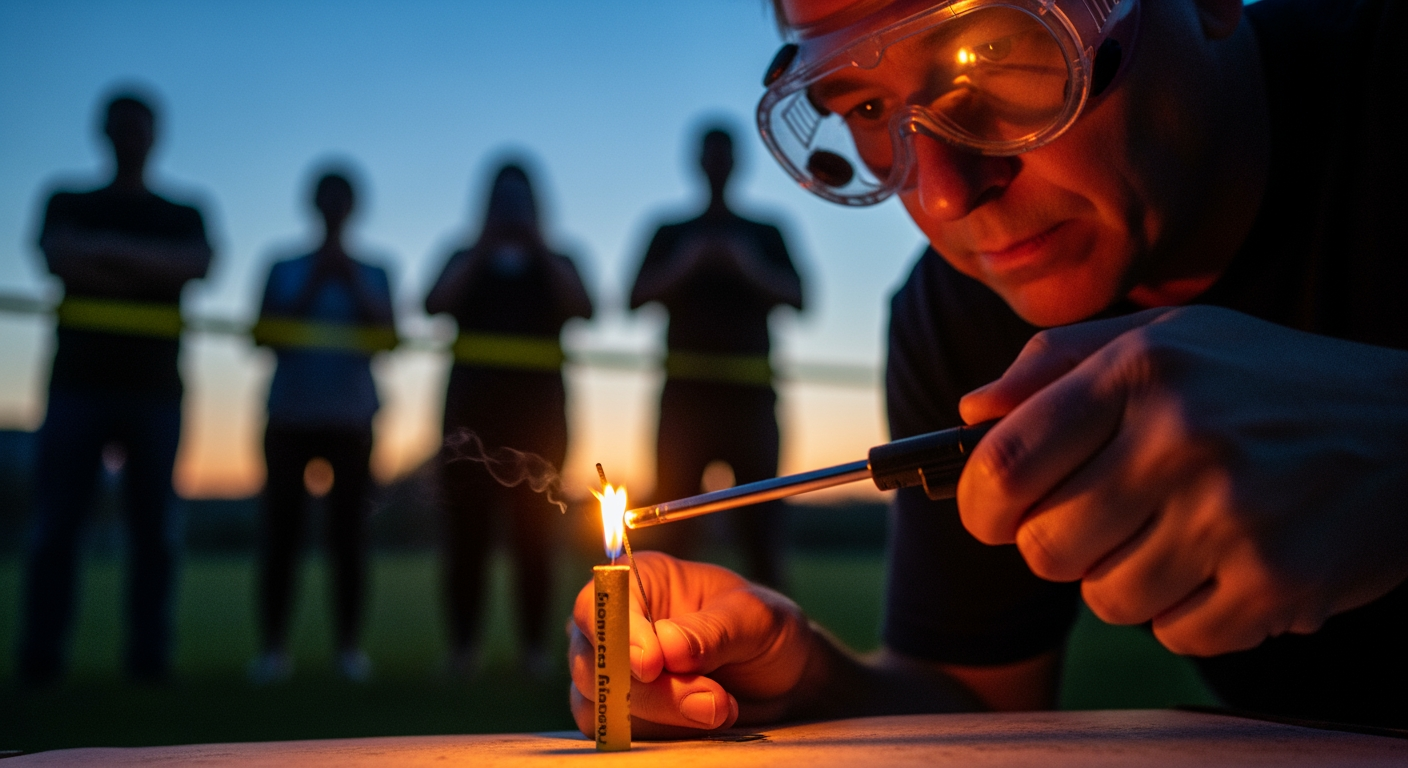
Fireworks are fun until something goes wrong—and your eyes are one of the most vulnerable targets. If you’re hosting a backyard celebration, supervising kids, or lighting “just a few” sparklers, having a simple plan for fireworks eye safety can help reduce the chance of a painful injury and a stressful trip for care. This guide is for families, party hosts, and anyone who plans to be around fireworks (even as a spectator) and wants practical, step-by-step ways to protect vision.
During the summer months, more outdoor gatherings and travel can mean more chances to be around fireworks—planned or unexpected.
If you want personalized guidance for your household, you can request an appointment with an fireworks eye safety eye doctor in Loganville, GA.
Fireworks Eye Safety
- Watch from a safe distance and avoid leaning over fireworks—many eye injuries happen during lighting or relighting.
- Use protective eyewear when handling fireworks; regular sunglasses aren’t a substitute for impact-rated protection.
- Supervise children closely around sparklers and firework debris; small hands + hot metal is a bad combo.
- Never attempt to remove embedded debris from the eye; stabilize and seek professional evaluation.
- Know the “stop signs” (pain, light sensitivity, blurry vision, bleeding) that should prompt urgent medical attention.
How Firework Injuries Affect the Eye
Firework-related eye injuries typically come from one of three things: heat, blunt impact, or flying debris. Even “small” devices can throw hot particles or fragments at high speed. The eye’s surface (cornea) is delicate, and deeper structures—like the lens and retina—can be affected by impact or pressure changes. That’s why symptoms can worsen over hours, not just minutes.
Good fireworks eye safety is less about memorizing rules and more about controlling the environment: who handles fireworks, where everyone stands, and what you do if something misfires.
The Real Consequences of Delayed Care
With eye injuries, waiting can make evaluation and treatment harder. Swelling can increase, abrasions can become more painful, and contamination can raise infection risk. In some cases, what feels like “just irritation” can actually be a scratch, a burn, or a foreign body that needs careful removal.
- Time: Delays can mean longer recovery and more follow-up visits.
- Comfort: Untreated abrasions and burns can be intensely painful.
- Safety: Rubbing the eye or using the wrong drops can worsen damage.
Common Missteps We See
- Relighting “duds” right away: Approaching too soon increases the risk of a sudden ignition near your face.
- Leaning over the device while lighting: Your eyes end up directly in the path of debris and flare.
- Using sunglasses as protection: They may help with brightness, but they aren’t designed for impact.
- Letting kids handle sparklers unsupervised: Sparklers burn hot and can shed particles; kids also tend to wave them at eye level.
- Rubbing the eye after exposure: This can grind debris into the surface and worsen scratches.
- Trying to “rinse out” everything: Flushing can help for some exposures, but it’s not a cure-all—especially if something is embedded.
Your Step-by-Step Fireworks Eye Safety Plan
What you’ll achieve: A practical setup and response plan that lowers the risk of eye injury before, during, and after fireworks.
Prerequisites
- Impact-rated protective eyewear for anyone lighting or handling fireworks
- A bright flashlight (for checking the area after)
- Clean water or sterile saline (for gentle flushing when appropriate)
- A small first-aid kit (clean gauze, tape)
- A plan for transportation if someone needs medical evaluation
-
Create a clear “launch zone” and a spectator zone.
Tip: Set a firm boundary so spectators aren’t tempted to drift closer for a better view.
-
Assign one adult as the only person who lights fireworks.
Tip: Fewer handlers means fewer chances for someone to lean in, rush, or improvise.
-
Put on protective eyewear before handling anything.
Tip: Put eyewear next to the lighter so it’s part of the routine, not an afterthought.
-
Light from the side—never directly over the device.
Tip: Keep your face back and your body angled away to reduce exposure if it flares.
-
Do not relight a device that didn’t go off.
Tip: Treat it as live. Keep people away and follow the product instructions for disposal.
-
Manage sparklers like a “hot tool,” not a toy.
Tip: Keep sparklers at arm’s length, away from faces, and have a designated bucket for cooling/disposal.
-
After the show, do a careful area check before kids run around.
Tip: Use a flashlight to look for smoldering debris and spent casings that can still be hot.
The “It Was Fine Until…” Pattern
In practice, we often see injuries happen during the least exciting moments—when someone walks up to a firework that didn’t launch, or when a spectator gets too close for a photo. A simple rule helps: if you didn’t light it, don’t approach it; if you did light it, don’t approach it again.
When to Seek Medical Help for an Eye Injury
Consider professional evaluation if any of the following occur after fireworks exposure:
- Moderate to severe eye pain
- New blurry vision, double vision, or reduced vision
- Light sensitivity that doesn’t improve
- Bleeding in or around the eye
- A visible cut, burn, or foreign object
- Persistent tearing, redness, or the feeling that something is stuck
Important: If you suspect an object is embedded, do not press on the eye. Protect it with a loose shield (like a clean paper cup) and seek urgent care.
Your Questions, Answered
Are sparklers actually risky for eyes?
They can be. Sparklers burn hot and can throw tiny particles. Close supervision, arm’s-length handling, and keeping them away from faces can reduce risk.
What should I do if I get debris in my eye?
Avoid rubbing. If it feels like loose dust, gentle flushing with clean water or sterile saline may help. If pain, vision changes, or the sensation persists, get evaluated.
Should I use eye drops after smoke exposure?
For mild irritation, preservative-free artificial tears may help. Avoid “get-the-red-out” drops unless a clinician recommends them, especially if symptoms are significant.
Is it safe to wear contact lenses around fireworks?
Contacts can trap debris and worsen irritation for some people. If you’ll be close to smoke or handling fireworks, consider glasses and protective eyewear instead.
Protecting your vision around fireworks comes down to planning, distance, and smart handling—plus knowing when symptoms are more than “just irritation.” Use protective eyewear, control who lights devices, and avoid relighting misfires. If an injury happens, don’t rub the eye or try to remove embedded debris, and seek appropriate medical evaluation.
Schedule a free consultation with our experts.