
Preparing for a LASIK visit can feel oddly like packing for a trip: you know you need “the essentials,” but the details get fuzzy fast. This LASIK consultation checklist is for anyone considering laser vision correction and wanting a smoother, more productive appointment. Bringing the right items—and the right questions—helps your surgeon evaluate your eyes accurately, explain your options clearly, and set realistic expectations for next steps. It can also reduce back-and-forth calls later (because nobody wants to play phone tag about a missing medication list). If you’re scheduling around summer travel and busy calendars, a little preparation can make the consultation day feel far less hectic.
To schedule a visit with our team, start here: LASIK consultation checklist in Athens, GA.
If you’re comparing office locations, you can also review care options here: LASIK consultation checklist in Greensboro, GA.
Bottom Line Upfront: What to Bring
- Bring your current glasses and contact lens information so measurements and discussions are based on your real-world vision needs.
- Bring a complete medication list (including drops and supplements) to help your doctor consider dryness, healing, and safety factors.
- Bring your medical and eye history—prior surgeries, diagnoses, and past prescriptions can change recommendations.
- Bring your questions and priorities (sports, night driving, screen time) so the plan fits your lifestyle.
- Plan for time and transportation because testing may include dilating drops or temporary blur.
How a LASIK Evaluation Typically Works
A LASIK consultation is a focused eye evaluation designed to determine whether laser vision correction is an appropriate option for you and, if so, which approach may fit your eyes and goals. The visit often includes a review of your health history, vision testing with your current correction, and specialized measurements of the cornea and ocular surface. Your doctor may also discuss how stable your prescription has been, whether dry eye is present, and what to expect before and after a procedure.
Because the recommendation depends on accurate measurements and a clear picture of your day-to-day vision needs, what you bring—and what you share—matters. This LASIK consultation checklist is meant to help you show up prepared without overthinking it.
Why Preparation Can Affect Your Timeline, Comfort, and Clarity
Coming prepared can make the visit more efficient and reduce the chance that you’ll need repeat testing. For example, not having your contact lens details (or not following contact lens instructions provided by the office) can sometimes affect measurements. Missing medication details can slow down decision-making, especially if your doctor wants to consider dryness, allergies, or other conditions that may influence candidacy or recovery planning.
Preparation also helps you get what you really came for: a clear explanation of your options, realistic expectations, and a plan that matches your priorities—whether that’s reducing dependence on glasses for work, sports, or just finding your phone on the nightstand without a scavenger hunt.
Mistakes That Derail a LASIK Consult
- ✓ Forgetting your contact lens specifics (brand, prescription, wear schedule). This can make it harder to interpret your baseline vision and dryness patterns.
- ✓ Leaving out over-the-counter items like allergy meds, sleep aids, or supplements. These can matter when discussing dryness, healing, and comfort.
- ✓ Not bringing your current glasses. Even if you “never wear them,” they provide useful information for comparison and backup planning.
- ✓ Arriving without your top 3 goals (night driving, reading, sports, screen time). Without goals, recommendations can feel generic.
- ✓ Assuming you’ll remember every question. Most people don’t—write them down.
- ✓ Scheduling with no buffer time. Testing can take longer than a quick refraction, and some exams may temporarily blur vision.
What to Bring and Do
- ✓ Your current glasses (all pairs you use). Bring everyday glasses and any “computer” or specialty pairs.
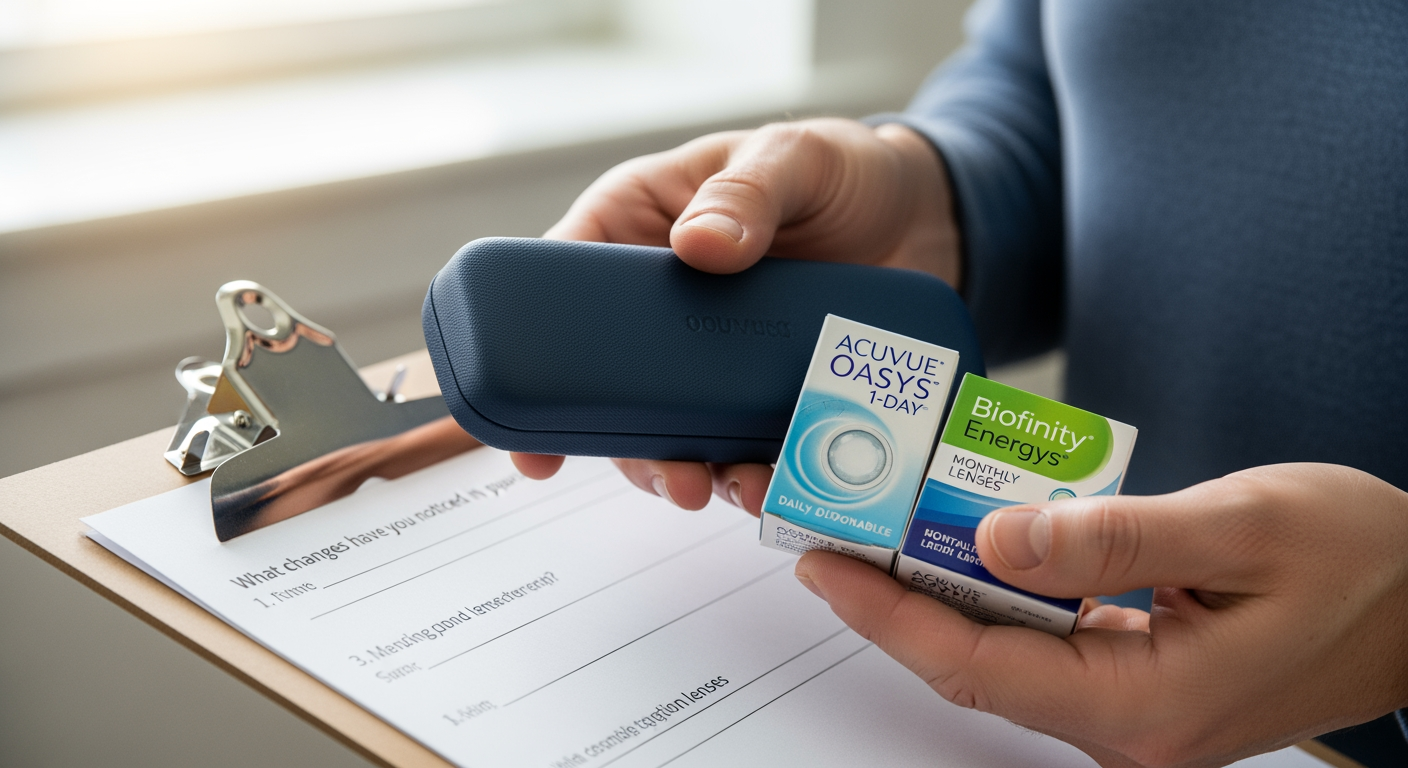
- ✓ Your contact lenses and contact lens prescription details. Include brand, base curve, and power if you have it; bring the boxes if that’s easiest.
- ✓ A full medication and drop list. Include prescription meds, OTC meds, vitamins/supplements, and any eye drops you use (lubricating, allergy, redness-relief).
- ✓ Relevant medical history. Past eye injuries, surgeries, autoimmune disease, diabetes, pregnancy/breastfeeding status, or medications that affect healing should be discussed with your doctor.
- ✓ Your vision “pain points” in writing. Example: “Halos at night,” “dryness with contacts,” “can’t see the alarm clock,” “headaches after screens.”
- ✓ Questions you want answered. A few high-value ones: “Am I a candidate?” “What are my alternatives?” “What should I expect during recovery?” “How might dry eye be managed?”
- ✓ Insurance and ID (if applicable). Vision correction consults and testing may be billed differently than routine care; your office can explain what applies to you.
- ✓ Transportation plan. If your visit includes dilation or tests that blur vision, consider having someone drive you—especially if you’re not comfortable driving afterward.
- ✓ Time buffer. Plan for the appointment to take longer than a standard glasses prescription update, particularly if multiple tests are performed.
The One Thing Most People Forget
In practice, we often see patients arrive with the right paperwork but without a clear picture of what they want life to look like after vision correction. When you can describe your day—night driving, long screen hours, outdoor hobbies, or contact lens discomfort—the conversation gets more specific, and the recommendations tend to feel more personalized and easier to compare.
When to Seek Professional Guidance Before Moving Forward
Schedule an eye evaluation and ask for guidance if any of the following apply:
- ✓ You have ongoing dry eye symptoms (burning, gritty feeling, fluctuating vision), especially with contacts.
- ✓ Your prescription has changed frequently in recent years and you’re unsure if it’s stable.
- ✓ You have a history of eye injury, infection, or surgery.
- ✓ You’re managing medical conditions or medications that could affect healing (your doctor can advise based on your situation).
- ✓ You’re experiencing new vision changes such as sudden blur, new floaters, flashes of light, or eye pain—contact an eye care professional promptly for guidance.
Common Questions Patients Ask Before a Consult
Do I need to stop wearing contacts before my evaluation?
Possibly. Contact lenses can affect corneal measurements, and your office may provide specific instructions based on your lens type and wear schedule. If you’re unsure, call ahead and ask what they recommend for your situation.
What if I don’t have my contact lens box or prescription?
Bring what you have—your lenses, glasses, or any prior paperwork. If you know where you last ordered contacts, that information may help you track down details later. Your doctor can tell you what’s needed for accurate planning.
Will my vision be blurry after the appointment?
Some tests can temporarily blur vision, especially if dilating drops are used. It’s smart to plan for the possibility that you may not want to drive immediately afterward.
How do I know if laser vision correction is right for me?
A consultation is designed to answer that question by reviewing your eye health, measurements, and goals. If LASIK isn’t the best fit, your doctor can discuss alternatives that may better match your eyes and lifestyle.
What questions should I ask to make the visit more productive?
Ask about candidacy, alternatives, expected recovery experience, how dry eye is evaluated and managed, and what outcomes are realistic for your prescription and daily needs.
Show Up Prepared, Leave With a Plan
This LASIK consultation checklist is meant to help you walk into your appointment with the right information, the right expectations, and fewer last-minute scrambles. Bring your current correction details, your medication list, and a short set of goals so your doctor can give guidance that fits your eyes and your life. If you’re considering vision correction, a well-prepared consultation with Georgia Eye Clinic is one of the simplest ways to get clear next steps. And if you have questions beforehand, it’s always reasonable to call the office to confirm what to bring and how to prepare.