
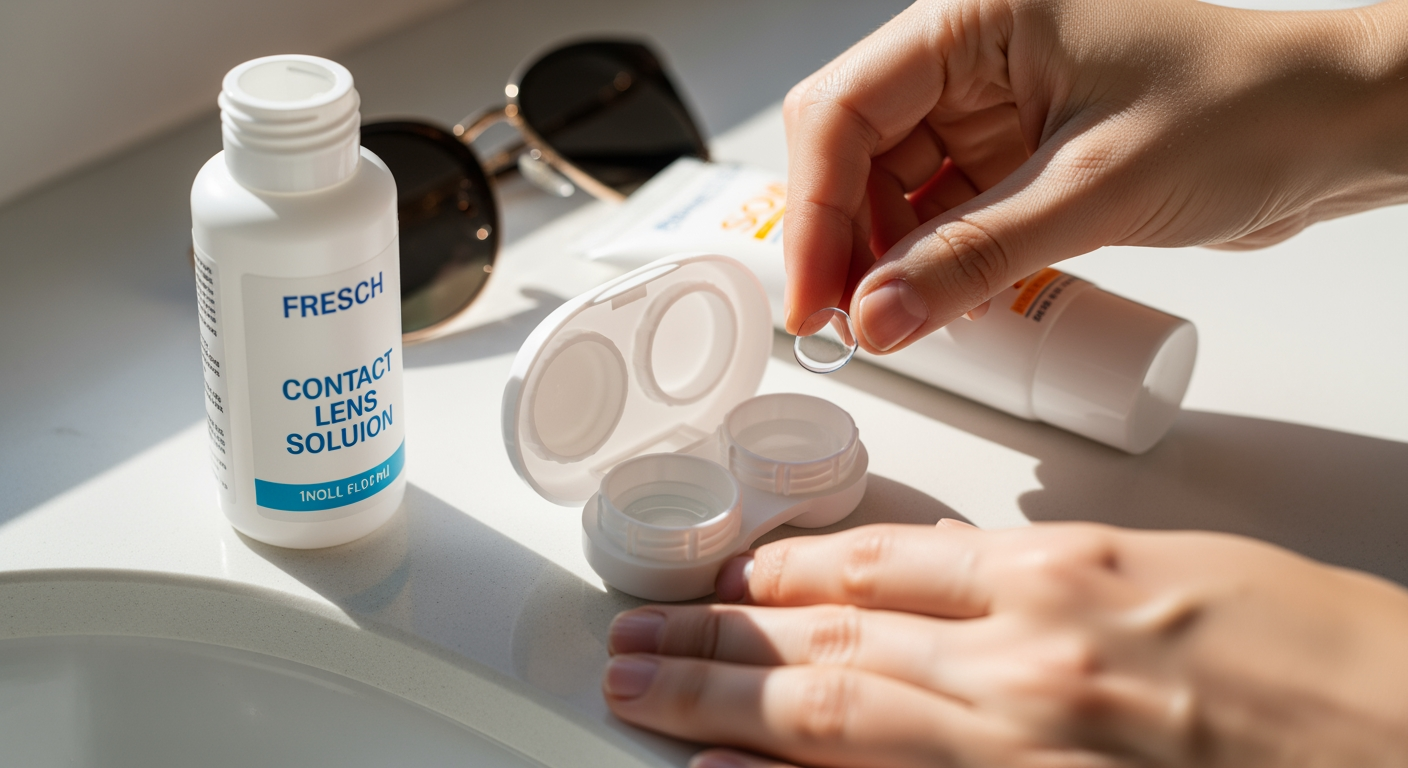
Contact lens care can feel trickier in the summer—more sweat, more sunscreen, more swimming, and more time in air-conditioned spaces that dry your eyes out. If you wear contacts (or your teen does), small habits can make a big difference in day-to-day comfort and in lowering the risk of irritation or infection. This FAQ-style guide covers the questions we hear most: what changes in warm-weather routines, what’s actually risky, and what to do when your eyes feel “off.” As spring shifts into warmer days, it’s a smart time to refresh your lens routine so you can enjoy the season without constantly thinking about your eyes.
If you’re looking for an eye doctor to help with contact lens comfort, fit, or a routine check-in, Georgia Eye can help you plan next steps during standard office hours.
For patients seeking contact lens care in Loganville, GA, this guide can also help you know what to ask at your next visit.
Quick Summer Contact Lens Takeaways
- Keep water away from lenses. Swimming, showering, and hot tubs can introduce germs—use prescription swim goggles or remove lenses first.
- Don’t “top off” solution. Empty, rinse (if directed by your solution), and air-dry the case; always use fresh disinfecting solution.
- Dry eye is common in heat + A/C. Ask your eye doctor which lubricating drops are compatible with your lens type.
- Sunscreen and bug spray can irritate eyes. Apply carefully, wash hands, and insert lenses before applying products when possible.
- Follow replacement schedules. Overwearing daily, biweekly, or monthly lenses can increase discomfort and risk.
- New pain, light sensitivity, or discharge isn’t normal. Remove lenses and call for guidance.
How Summer Changes Your Contact Lens Routine
Warm-weather activities increase exposure to things that don’t mix well with contacts: water, airborne allergens, sweat, and chemical sprays. At the same time, indoor air conditioning can reduce humidity and make lenses feel dry or “stuck.” The goal of summer lens hygiene is simple: keep lenses clean, keep water away, and keep your eyes comfortable enough that you’re not tempted to bend the rules (like sleeping in lenses or stretching wear time).
Contact lenses are medical devices. The safest routine is the one your eye doctor recommends for your specific lens type (daily disposable vs. reusable), your tear film, and your lifestyle.
Why Summer Slip-Ups Can Matter More Than You Think
Some contact lens problems are just annoying—temporary dryness or mild irritation. Others can become more serious, including infections or corneal inflammation. Summer tends to add “stacked” risk: you’re outdoors more, you may rub your eyes more, and you may be around water more often. Even a small shortcut (like rinsing a lens with water or reusing old solution) can raise the odds of a painful problem that interrupts work, vacations, sports, and driving.
A Simple Summer Plan for Safer Lens Wear
- Wash and dry hands before touching lenses — Use soap, rinse well, and dry with a lint-free towel.
- Insert lenses before skincare and sunscreen — Then wash hands after applying products if you’ll touch your eyes again.
- Use fresh disinfecting solution every time — No topping off; discard old solution from the case.
- Clean and air-dry the case daily — Replace the case as often as your eye doctor recommends.
- Carry a “lens kit” — Backup glasses, a case, solution (for reusables), and compatible lubricating drops.
- Plan ahead for water activities — Wear prescription swim goggles or take lenses out before you swim.
- Follow your wearing schedule — If your eyes feel dry, shorten wear time and ask about options.
Professional Insight: The Pattern We See Every Summer
In practice, we often see that summer discomfort isn’t caused by one big mistake—it’s usually a few small changes at once: longer days in contacts, more A/C exposure, more eye rubbing, and a couple of “quick” rinses or skipped case cleanings. Tightening up just one or two habits (especially keeping water away and using fresh solution) often makes routines easier to stick with.
When to Call Your Eye Doctor About Contact Lens Problems
Remove your lenses and seek professional guidance if you notice any of the following, especially if symptoms don’t improve quickly after removing the lens:
- Eye pain (not just mild dryness)
- Light sensitivity
- Worsening redness or a red eye that looks different than typical irritation
- Discharge or crusting
- Sudden blurry vision that doesn’t clear with blinking
- A scratchy feeling that persists (possible foreign body or lens damage)
- Symptoms after swimming or hot tub use while wearing lenses
If you think you may have an urgent eye issue, call ahead for instructions during office hours.
Your Summer Lens Questions, Answered
Can I swim with contacts if I’m careful?
It’s generally safest to avoid wearing contacts in pools, lakes, oceans, and hot tubs because water can carry microorganisms that may adhere to the lens. If you need vision correction in the water, ask about prescription swim goggles or other options.
What should I do if sunscreen gets on my contacts?
Remove the lens, rinse it only with the recommended contact lens solution (not water), and clean/disinfect it as directed for your lens type. If the lens still feels irritating or your eye is red or painful, leave the lens out and call your eye doctor for guidance.
Why do my contacts feel dry in air conditioning?
Air-conditioned environments often reduce humidity and can increase tear evaporation. Taking breaks with glasses, using compatible lubricating drops, and discussing lens material or replacement schedules can help.
Is it okay to use any eye drops with contacts?
No. Use only drops labeled as safe for use with contact lenses, and follow your eye doctor’s recommendations—especially if you have allergies, frequent redness, or dry eye symptoms.
How often should I replace my contact lens case?
Replacement timing varies by product and patient routine. A good rule is to replace it regularly and anytime it looks damaged or won’t fully clean. If you’re unsure what schedule fits your setup, ask at your next visit.
Moving Forward
Summer is a great time to reset the basics: keep lenses away from water, use fresh solution, and don’t push wear time when your eyes feel dry. If you’re noticing recurring irritation, blurred vision, or discomfort, a contact lens evaluation can help identify whether the issue is fit, dryness, deposits, or product compatibility. The right plan is the one that matches your eyes and your routine. Still have questions about your lens type, drops, or a safer approach for swimming and travel? We’re happy to help.