
Summer sun can feel great—until your eyes remind you they don’t come with built-in sunglasses. If you’re driving more, spending weekends outside, or just walking the dog at midday, UV eye protection matters for kids, adults, contact lens wearers, and anyone who spends time outdoors.
Ultraviolet (UV) exposure can irritate the surface of the eye and may contribute to long-term eye health concerns over time. The good news: small choices—like the right sunglasses, a hat, and smart timing—can make outdoor time more comfortable and help you protect your vision.
If you’re looking for guidance on UV eye protection in Commerce, GA, this checklist-style guide breaks down what to buy, what to avoid, and when to schedule an eye visit.
The Essentials for Summer UV Safety
- Choose sunglasses labeled “100% UV” or “UV400.” Dark lenses alone don’t guarantee UV blocking.
- Prioritize wraparound or larger frames. They reduce UV entering from the sides—especially helpful on water, pavement, and sand.
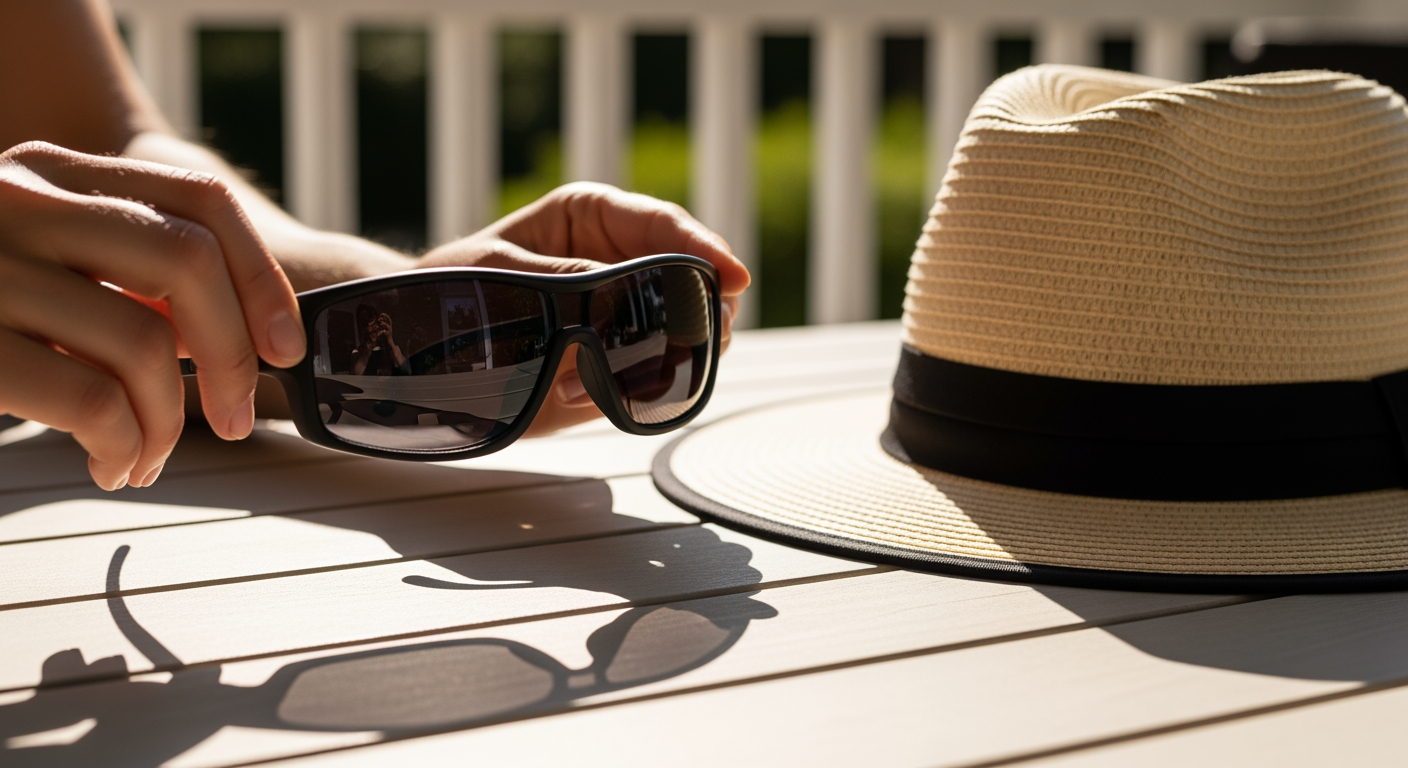
- Add a wide-brim hat. It’s simple shade that supports your sunglasses.
- Don’t forget kids’ eyes. Children often spend more time outside and may be less consistent with eyewear.
- Use extra caution around reflective surfaces. Water and bright concrete can increase glare and UV exposure.
- Schedule routine care if you’re due. An eye exam can help monitor overall eye health and update prescriptions for summer activities.
How UV Exposure Affects Your Eyes (And What Protection Actually Does)
UV light is invisible radiation from the sun. Your skin isn’t the only thing that can be affected—your eyes can be exposed too, especially when you’re outside for long stretches or around reflective surfaces.
UV eye protection works by blocking or filtering UV rays before they reach sensitive eye structures. Quality sunglasses are designed to reduce UV transmission; the goal is not just comfort from brightness, but meaningful UV blocking.
Protection is a layered approach: sunglasses + hat + timing your outdoor activities when possible. If you wear contact lenses, some lenses provide UV filtering, but they typically don’t cover the entire eye area—so sunglasses still matter.
Why Summer Timing Matters for Eye Comfort and Long-Term Habits
Summer tends to increase daily UV exposure because people spend more time outdoors, drive more, and take trips that involve water, sports, or long hours outside. That combination can lead to more squinting, dryness, and glare-related discomfort.
From a practical standpoint, consistent protection can also reduce eye strain during outdoor activities and make it easier to see clearly when you’re driving or playing sports. If you’re already dealing with dry eye symptoms, allergies, or a changing prescription, summer can make those issues feel more noticeable—another reason to keep routine care on your calendar.
Common Missteps That Undercut UV Protection (Checklist)
- Buying “fashion” sunglasses without UV labeling. If it doesn’t say “100% UV” or “UV400,” assume it may not provide adequate blocking.
- Assuming darker lenses equal better protection. Lens darkness is about visible light; UV protection is a separate feature.
- Skipping coverage from the sides. Narrow frames can let UV in from angles you don’t notice.
- Forgetting protection on cloudy days. UV can still reach your eyes even when the sun isn’t obvious.
- Leaving sunglasses in the car and “making do.” Inconsistent use is one of the most common reasons people don’t get the benefit.
- Not updating your prescription. If you’re squinting through an outdated prescription, you may be more likely to skip sunglasses or wear the wrong pair.
Your Summer Eye-Safety Game Plan (Checklist)
- Check your current sunglasses today. Look for “100% UV” or “UV400” on the tag or inside the arm.
- Keep a “go pair” by the door. Make sunglasses as automatic as grabbing your keys.
- Use a hat for added shade. Especially helpful for yard work, sports, and long walks.
- Pack eye comfort essentials for trips. Consider artificial tears (if appropriate for you), a hat, and a backup pair of sunglasses.
- Plan outdoor time strategically. When possible, choose shaded routes and take breaks from intense glare.
- Schedule routine care if it’s been a while. An eye exam is a good time to ask about UV-blocking options for prescription lenses or sunglasses.
Professional Insight: The “Good Sunglasses, Wrong Fit” Problem
In practice, we often see people who bought high-quality lenses but still struggle with glare and discomfort because the frames don’t fit their face well—UV and light sneak in from the sides or top. A better-fitting frame (often larger or wraparound) can make a noticeable difference in day-to-day comfort, especially during summer driving and outdoor activities.
When to Seek Eye Care Instead of Self-Troubleshooting
Basic sun safety habits help, but you should consider scheduling an appointment if you notice:
- Eye pain, significant light sensitivity, or a gritty feeling after extended time outdoors
- Sudden changes in vision (blur, distortion, new floaters, flashes of light)
- Persistent redness or tearing that doesn’t improve with rest and basic comfort steps
- Headaches or squinting that may suggest your prescription has changed
- You’re overdue for routine care and want guidance on sunglasses, prescription options, or overall eye health
Georgia Eye does not provide emergency eye care outside of standard office hours. If you believe you’re experiencing an emergency, seek urgent medical attention.
Common Questions About Summer Eye Protection
What label should I look for when buying sunglasses?
Look for “100% UV protection” or “UV400.” If the labeling is unclear, ask the retailer or choose a pair with clearly stated UV-blocking specifications.
Are polarized lenses the same as UV-blocking lenses?
No. Polarization reduces glare, which can improve comfort and clarity, especially around water or while driving. UV blocking is a separate feature—ideally, you want both.
Do contact lenses replace the need for sunglasses?
Some contact lenses provide UV filtering, but they typically don’t cover the entire eye area. Sunglasses and a hat still help protect the eyes and surrounding tissues.
How often should I schedule routine vision care?
Frequency depends on age, medical history, vision changes, and risk factors. If you’re unsure, a routine visit is a good time to ask what schedule makes sense for you.
Is it worth getting prescription sunglasses?
For many people, prescription sunglasses make it easier to wear UV-blocking eyewear consistently because you don’t have to choose between clear vision and sun comfort.
Taking the Next Step This Summer
Summer is a great time to build simple habits that support comfortable outdoor vision: verify your sunglasses’ UV rating, choose frames that fit well, and use a hat for extra coverage. If you’re squinting, getting headaches, or relying on an older prescription, it may be time to update your eyewear plan. For patients who want local guidance, you can also explore care options through our UV eye protection in Athens, GA resource.
Book Your Consultation
Schedule a free consultation with our experts.