
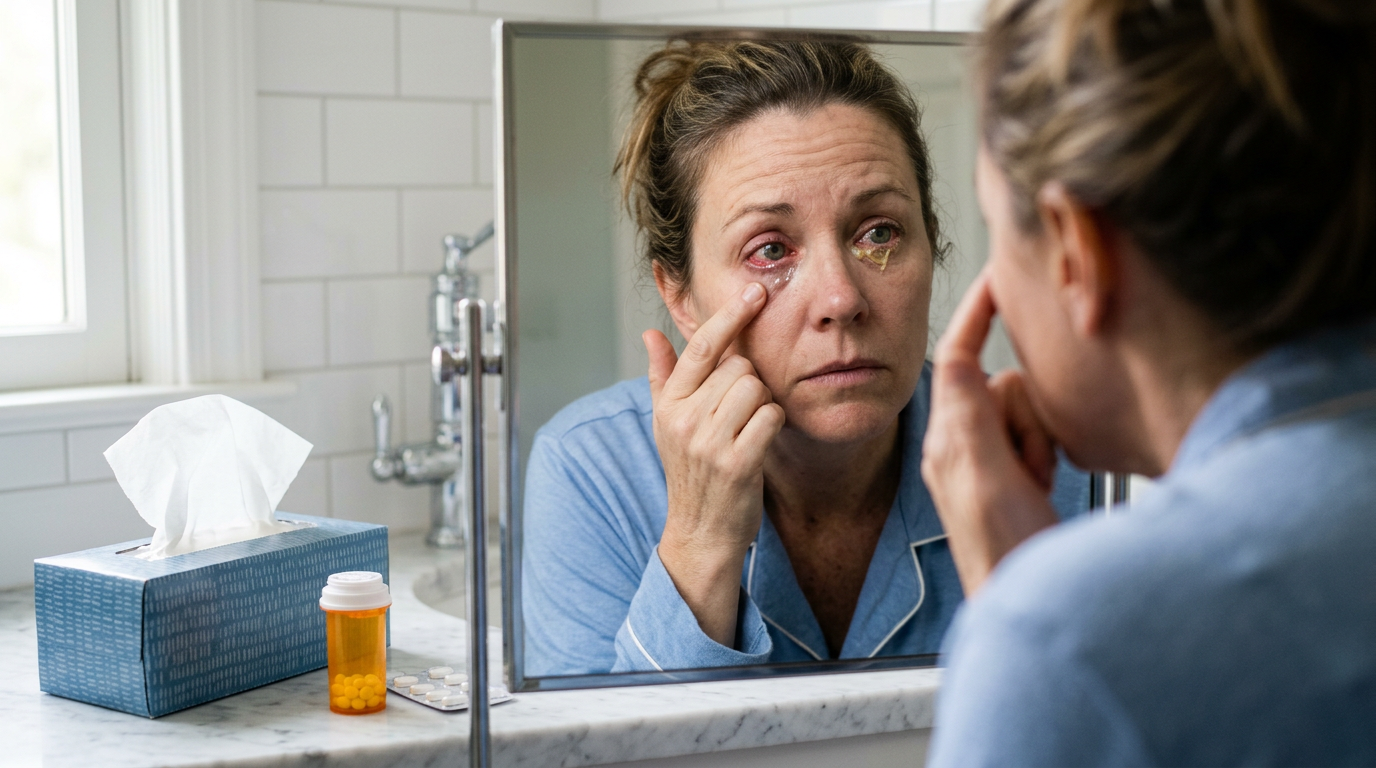
Red, itchy, watery eyes can look the same in the mirror—but the cause (and what you should do next) can be very different. This guide compares eye allergies vs pink eye for adults, parents, contact lens wearers, and anyone trying to decide whether to treat symptoms at home or book an appointment. The difference matters because allergic irritation is usually triggered by environmental exposures, while infectious conjunctivitis can spread to others and may require specific precautions. In the fall, ragweed and other seasonal triggers can make the “Is this allergies or an infection?” question feel even more urgent.
This article focuses on practical signs, typical timelines, and smart next steps—without guesswork or promises. If you’re unsure, an eye care professional can help confirm the cause and rule out problems that can mimic both.
Quick decision guide (24–48 hours):
- If itching is the main symptom and symptoms are in both eyes (or quickly become both), especially with seasonal/outdoor triggers: try cool compresses, preservative-free artificial tears, and allergen avoidance for 24–48 hours.
- If you have thick discharge, a recent cold, or close contact with someone with “pink eye”: treat it as potentially contagious (hand hygiene, don’t share towels/makeup) and consider an exam if it’s not improving or you’re unsure. Viral conjunctivitis is commonly contagious, and hygiene helps reduce spread (CDC).
- If you have pain, light sensitivity, vision changes, a swollen/tender eyelid, or you wear contact lenses: get a same-day/urgent eye evaluation. These can signal conditions more serious than simple allergies or routine conjunctivitis (AAO).
If you want a local evaluation, you can schedule an appointment for eye allergies vs pink eye care in Loganville, GA.
Key Points to Know First
- Itching strongly points to allergies; pink eye is more often gritty, burning, or sore. (Not definitive—some infections can itch, and allergies can also feel irritated.)
- Thick, yellow/green discharge can be more consistent with bacterial conjunctivitis than allergies, but discharge color alone isn’t diagnostic.
- Both eyes at once is common with allergies; pink eye often starts in one eye, then may spread. (Either condition can involve one or both eyes.)
- Allergy symptoms fluctuate with exposure (outdoors, pets, dust); infectious conjunctivitis often follows a steadier day-to-day course, though viral symptoms can vary.
- Contact lens wearers should be cautious: stop lens wear until you’re evaluated, especially with pain, light sensitivity, discharge, or reduced vision.
- Seek prompt care for significant pain, light sensitivity, vision changes, or a swollen, tender eyelid (AAO).
How They Differ
Both conditions can inflame the conjunctiva (the thin tissue covering the white of the eye and inner eyelids), which is why they can look similar. The key difference is the trigger:
- Eye allergies are an immune response to irritants like pollen (including ragweed), dust mites, pet dander, or mold. Symptoms often come and go with exposure.
- Pink eye (conjunctivitis) is most commonly viral or bacterial. Viral conjunctivitis often accompanies cold-like symptoms and can be contagious. Bacterial conjunctivitis may produce thicker discharge and can also spread. (CDC)
Side-by-side comparison
| Criteria | Ragweed/seasonal eye allergies | Pink eye (viral/bacterial) |
|---|---|---|
| Most common sensation | Itching, watery irritation | Gritty, burning, scratchy; sometimes tender |
| Discharge | Clear, watery | Watery (viral) or thicker yellow/green (bacterial) |
| One eye or both? | Often both at the same time (but can start in one) | Often starts in one eye, may spread (but can be in both) |
| Contagious? | No | Often yes (especially viral) (CDC) |
| Typical timing | Fluctuates with exposure; may be seasonal | Develops over days; runs a course over time |
| Common add-ons | Sneezing, runny nose, allergy history | Recent cold, sore throat, exposure to someone with conjunctivitis |
Cost/value considerations
For mild symptoms that clearly match allergies (itching, clear tearing, symptoms in both eyes or tied to exposure), low-cost steps like cool compresses, preservative-free artificial tears, and allergen avoidance can be reasonable first moves. If symptoms suggest infection (new close exposure, worsening redness with discharge) or you have red-flag symptoms, the value of an exam is in getting the right diagnosis and avoiding unnecessary or ineffective treatments.
Why Getting It Wrong Can Drag On
Mixing up allergies and conjunctivitis can waste time and increase discomfort. Allergy symptoms may persist as long as exposure continues, so treating only “infection” won’t address the trigger. On the other hand, treating a contagious conjunctivitis like it’s only allergies can increase the chance of spreading it to family members, classmates, or coworkers (CDC).
There’s also a safety angle: not every red eye is allergies or pink eye. Conditions like keratitis (corneal inflammation), uveitis, or angle-closure glaucoma can cause redness and require urgent evaluation—especially when pain, light sensitivity, or vision changes are present (AAO).
Common Missteps to Avoid
- Rubbing your eyes — worsens allergic inflammation and can irritate already-inflamed tissue.
- Sharing towels, pillowcases, or eye makeup — increases spread risk if the cause is infectious.
- Using leftover antibiotic drops — may be ineffective (many cases are viral or allergic) and can delay proper care.
- Wearing contact lenses during symptoms — raises the risk of corneal complications; pause lens wear until cleared.
- Assuming “no discharge means no infection” — viral conjunctivitis can be watery and still contagious (CDC).
- Ignoring pain or light sensitivity — those symptoms deserve an eye exam rather than watchful waiting (AAO).
A Smart At-Home Plan Before Your Visit
- Track the pattern for 24–48 hours: one eye vs both, exposure triggers (outdoors, pets), and whether itching is dominant. (Patterns help, but they don’t confirm the diagnosis on their own.)
- Use cool compresses for itch and swelling; keep compresses clean and don’t share them.
- Try preservative-free artificial tears to rinse allergens and soothe irritation (avoid “redness reliever” drops unless advised).
- Practice strict hygiene if infection is possible: handwashing, separate towels, avoid touching eyes (CDC).
- Pause contact lenses and switch to glasses until symptoms resolve and you’re advised it’s safe.
- Write down your meds and recent exposures (new cosmetics, recent cold, sick contacts, outdoor yardwork).
A Word from Experience
Clinicians often rely less on how “red” an eye looks and more on the overall symptom pattern—for example, whether itching is dominant, whether discharge is watery or thick, whether symptoms track with seasonal triggers, and whether there are red-flag symptoms like pain, light sensitivity, or vision changes. These clues can help guide safer next steps, but they aren’t definitive; an eye exam is the best way to confirm the cause and rule out more serious problems (AAO).
When to Seek Medical Help for a Red Eye
Schedule an evaluation sooner rather than later if any of these apply:
- Moderate to severe eye pain or a deep ache (AAO)
- Light sensitivity that makes it hard to keep the eye open (AAO)
- New or worsening blurry vision (not just watering-related) (AAO)
- Contact lens use with redness, discharge, pain, or decreased vision
- Marked eyelid swelling, tenderness, or fever
- Symptoms that don’t improve with reasonable allergy steps or supportive care
Frequently Asked Questions
How can I tell if it’s allergies if my eyes are very red?
Redness can happen with both. Strong itching, clear watery tearing, and symptoms in both eyes—especially alongside sneezing or a runny nose—fit allergies more than infection. Still, allergies can start in one eye, and infections can involve both, so consider an exam if you’re unsure or symptoms escalate.
Is conjunctivitis always contagious?
No. Allergic irritation is not contagious. Viral and bacterial conjunctivitis can be contagious, so hygiene and avoiding shared linens or cosmetics is a good precaution if infection is possible (CDC).
Should I use antibiotic eye drops right away?
Not necessarily. Many cases are viral or allergic, and antibiotics won’t help those. A clinician can confirm the likely cause and recommend the most appropriate treatment.
Can I wear contact lenses if symptoms are mild?
It’s safer to stop contact lens wear when you have redness, discharge, or discomfort until you’re evaluated or symptoms fully resolve. Contacts can worsen irritation and may increase the risk of corneal problems.
What should I do at home while waiting for an appointment?
Use cool compresses, preservative-free artificial tears, avoid rubbing, and follow strict hand hygiene. If infection is possible, don’t share towels or eye products.
Moving Forward
Ragweed-related eye allergies and pink eye can look similar, but the symptom pattern can offer useful clues: itching and exposure-linked watering often suggest allergies, while contagious conjunctivitis more often brings a gritty sensation and can spread through close contact. These patterns aren’t foolproof—viral conjunctivitis can affect both eyes, and allergies can start in one—so if you’re unsure, an eye exam can clarify what’s going on and help you choose the safest next step. For guidance on contagiousness and prevention, see CDC resources; for red-flag symptoms that warrant urgent evaluation, see AAO guidance.
For eye symptoms like redness, discharge, or irritation, the next step is usually an eye exam so a clinician can confirm the cause and recommend appropriate treatment. If you have pain, light sensitivity, vision changes, or you wear contact lenses, request a prompt evaluation.