
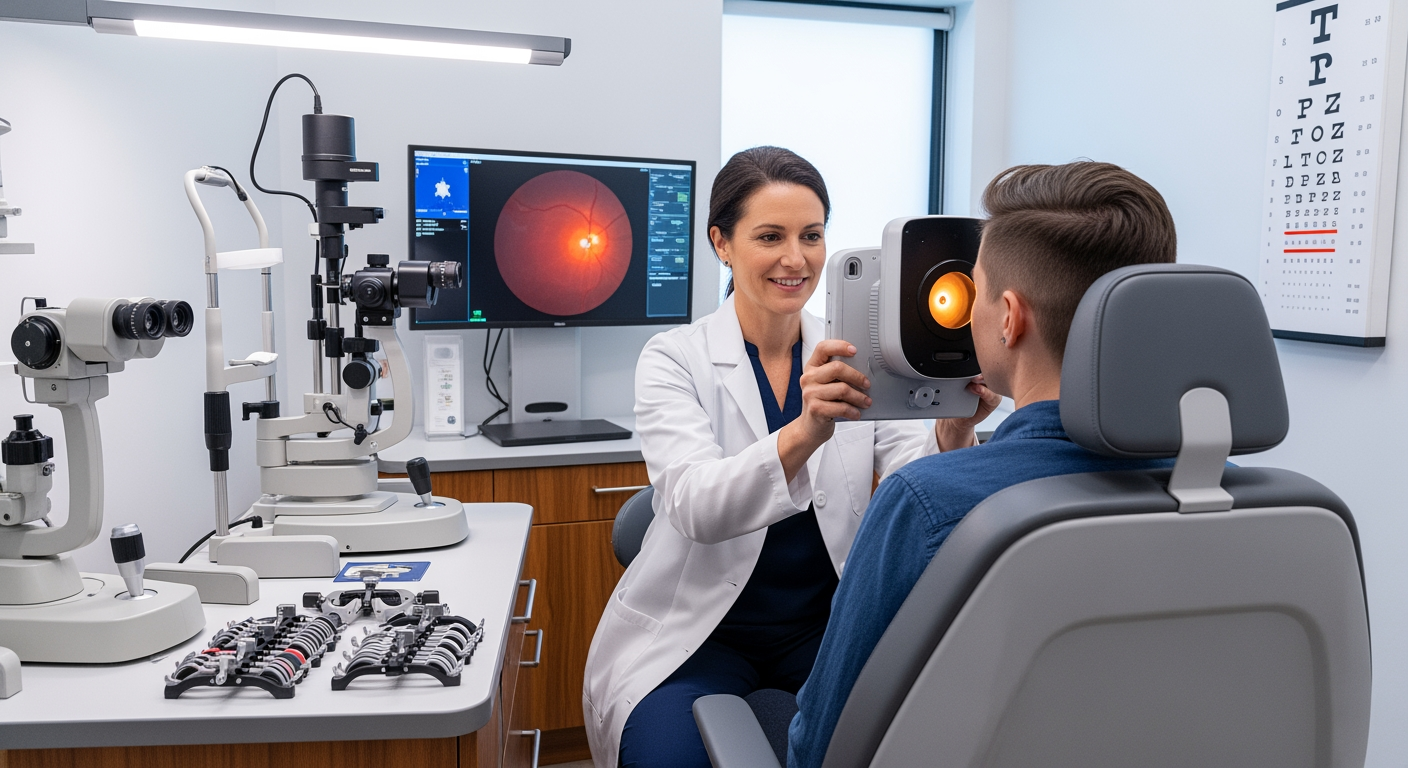
Preparing for a diabetic eye exam can feel uncertain if you don’t know what happens in the room, what tests you’ll get, or how long it will take. This guide is for adults with diabetes (and caregivers) who want a clear, step-by-step plan for scheduling, preparing, and following through—so you can get accurate results and useful next steps. Eye changes related to diabetes can develop without obvious symptoms, which is why a structured exam matters even when your vision seems “fine.” If you’re traveling more during the summer months, it’s also a good time to make sure routine health appointments don’t get pushed off the calendar.
You’ll leave knowing what to bring, what to expect during dilation and imaging, what questions to ask, and how to use your results to guide follow-up care. (This article is educational and not a substitute for individualized medical advice.)
If you’re looking to schedule a diabetic eye exam in Loganville, GA, this checklist will help you show up prepared and get the most out of your visit.
What You’ll Achieve
- Know the typical parts of a diabetes-focused eye evaluation (history, vision check, eye pressure, retinal exam, and often imaging).
- Arrive with the right information (medications, A1C if you have it, and any recent vision changes) to support accurate interpretation.
- Plan for dilation effects (blurry near vision and light sensitivity) so your day doesn’t get derailed.
- Understand what your clinician may be looking for, including diabetic retinopathy and swelling in the retina (macular edema).
- Leave with a practical follow-up plan: when to return, what symptoms should trigger a call, and what records to keep.
How a Diabetic Eye Exam Typically Works
The goal is to evaluate both how well you see and the health of the structures inside your eyes—especially the retina and optic nerve. Your exact testing can vary based on your history and what your clinician sees.
Prerequisites (before you start)
- Time: Plan for 60–90 minutes if dilation and imaging are performed.
- Transportation: Consider a driver if dilation usually makes you uncomfortable or if you’re sensitive to glare.
- Items to bring: Glasses/contacts, sunglasses, medication list, and any prior eye records if you have them.
- Schedule the right appointment type.
Tip: When you call, mention you have diabetes and want a comprehensive exam that includes a retinal health evaluation. If you’ve had prior retinopathy, injections, or laser treatment, say so up front.
- Share your health and vision history clearly.
Tip: Be ready to discuss how long you’ve had diabetes, any changes in blood sugar control, pregnancy status (if applicable), and any new symptoms like blurry vision, floaters, or distortion.
- Complete baseline vision testing.
Tip: Even if you’re here for eye health, updating your glasses or contact lens prescription can help separate “needs a new prescription” from “needs medical evaluation.”
- Have your eye pressure and front-of-eye structures checked.
Tip: If you’re anxious about the “air puff,” ask what method is being used. Many offices can explain options and what each test measures.
- Undergo dilation (when appropriate) and a retinal exam.
Tip: Dilation helps your clinician see more of the retina. Bring sunglasses and avoid scheduling right before tasks that require crisp near vision (like detailed computer work).
- Get retinal imaging if recommended.
Tip: Imaging such as OCT (to assess retinal layers and swelling) or widefield photos can help document changes over time. Ask how your images will be compared at future visits.
- Review results and leave with a follow-up plan.
Tip: Before you go, confirm: what was found, what it means, when you should return, and what symptoms should prompt an earlier call.
Why Timing and Follow-Through Matter for Your Vision
Diabetes-related eye disease can progress quietly. The practical stakes usually come down to three things: catching problems early, keeping a consistent record over time, and acting quickly if symptoms appear.
- Safety: Sudden changes—like new floaters, flashes, or a curtain-like shadow—should be addressed promptly.
- Outcomes: Earlier detection can expand your options for monitoring and treatment planning, depending on what’s found.
- Time and logistics: Dilation can temporarily blur vision, which affects driving and work; planning ahead reduces stress.
- Continuity: Comparing today’s exam and images to prior visits is often how subtle changes are recognized.
Common Missteps That Make Exams Less Useful
- Skipping dilation without discussing it. In some cases, a non-dilated exam may miss important peripheral retinal findings.
- Forgetting your medication list. Some medications and health conditions can affect dry eye, focusing, or eye pressure readings.
- Not mentioning recent vision changes. Even “small” changes (like wavy lines or intermittent blur) can guide what tests are needed.
- Assuming no symptoms means no risk. Diabetes-related retinal changes can occur before you notice a problem.
- Leaving without a clear follow-up interval. “Come back sometime” isn’t a plan—get a specific timeframe based on your findings.
Your Practical Prep Plan for a Smooth Appointment
- Bring sunglasses to reduce light sensitivity after dilation.
- Write down 2–3 questions you want answered (e.g., “Do you see any signs of retinopathy?” “Do I need imaging today?”).
- Track symptoms for a week beforehand if you’ve noticed changes (when it happens, which eye, how long it lasts).
- Bring your current glasses/contacts and any recent prescriptions.
- Ask for copies or portal access to your retinal images when available, so you can keep your own records.
What Most Patients Don’t Realize
In practice, we often see that the most productive visits happen when patients arrive with a short, specific symptom timeline and a current medication list—because it helps the clinician connect exam findings to real-life changes and decide whether additional imaging or closer follow-up is needed.
When to Seek Eye Care Sooner Than Your Routine Visit
Schedule an earlier evaluation (or call your eye doctor promptly) if you notice:
- New floaters, flashes of light, or a shadow/curtain in your vision
- Sudden blurry vision that doesn’t clear
- Wavy or distorted vision (straight lines look bent)
- New difficulty reading or recognizing faces
- Eye pain, significant redness, or light sensitivity
If symptoms are severe or rapidly worsening, seek urgent medical attention through appropriate emergency services.
Your Questions, Answered About Diabetes-Related Eye Visits
Will my eyes be dilated at the appointment?
Dilation is common because it allows a more complete view of the retina. Whether it’s recommended for you depends on your history, symptoms, and what your clinician needs to evaluate that day.
How long will the visit take?
Many comprehensive visits take about an hour, and longer if dilation and imaging are performed. Your office can give a more accurate estimate when you schedule.
Can I drive afterward?
Some people can drive after dilation, but many experience light sensitivity and blurry near vision. If you’re unsure how you’ll feel, plan for a driver or arrange transportation.
What should I bring to help the doctor?
Bring your glasses or contacts, a current medication list, and any prior eye records you have. If you know recent lab values (like A1C), you can share them, but don’t delay care if you don’t have them on hand.
If my vision seems fine, do I still need this kind of exam?
Yes, many diabetes-related retinal changes can develop before noticeable symptoms. Routine evaluations help establish a baseline and monitor for changes over time.
Taking Action
A diabetes-focused eye evaluation is easier when you know the steps: schedule the right visit, bring the right information, plan for dilation, and leave with a clear follow-up plan. If you treat the appointment like a quick “vision check,” it’s easy to miss the parts that protect long-term eye health. Use the checklists above to make your visit efficient and informative—then keep your records so future comparisons are meaningful.
Schedule a free consultation with our experts.