
Choosing between contact lens types can feel deceptively simple—until you’re dealing with dryness, blurry vision late in the day, or lenses that just won’t cooperate. If you’re comparing hard vs soft contacts, you’re likely trying to balance comfort, clarity, convenience, and long-term value. This guide is for people who wear contacts now (or want to), including first-time wearers, busy parents, students, and anyone who needs reliable vision for work, driving, or sports. In the summer months, more outdoor time, travel, and pool days can also make lens comfort and hygiene feel a lot more “real life” than theoretical.
We’ll break down how each option works, who tends to do best with each, what costs to expect, and the common mistakes that lead to frustration. If you want help choosing the right fit, Georgia Eye can guide you through a contact lens evaluation during a routine eye exam.
If you’re looking for help comparing contact lens options locally, start with hard vs soft contacts in Commerce, GA.
Hard vs Soft Contacts
- Soft lenses usually feel comfortable faster and are often easier for first-time wearers to adapt to.
- Hard (rigid gas permeable) lenses can provide crisp vision for certain prescriptions and may last longer with proper care.
- Daily routines matter: cleaning, replacement schedules, and water exposure habits often influence success more than the lens “type.”
- Upfront cost and long-term value can differ: soft lenses may cost less to start, while rigid lenses may be replaced less often.
- The “best” choice depends on your eyes, prescription, comfort needs, and how consistently you can follow care instructions.
What Each Lens Type Really Is
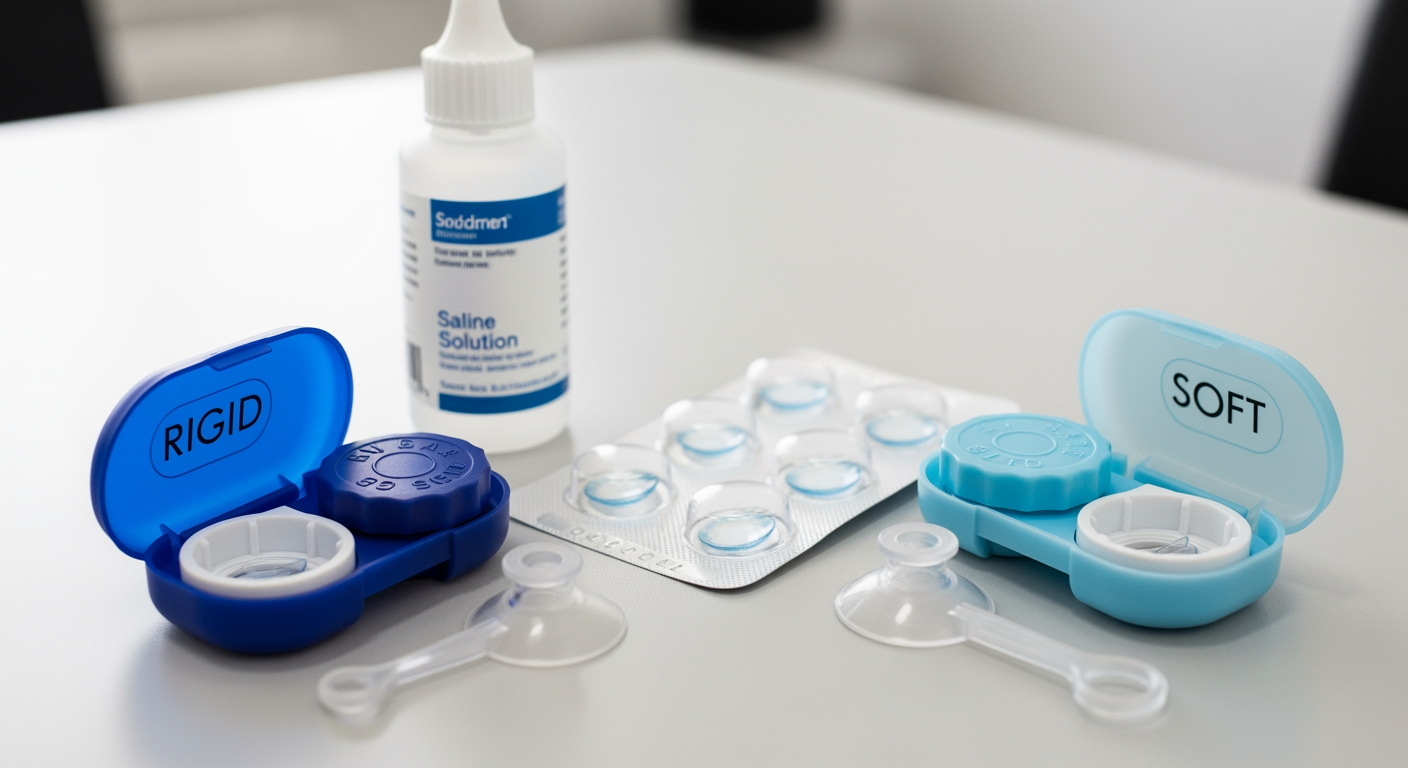
Soft contact lenses are flexible lenses that conform to the surface of the eye. Many people like them because they tend to feel comfortable quickly and stay in place during everyday activities.
Hard contacts typically refers to rigid gas permeable (RGP) lenses. They hold their shape on the eye, which can help create a smooth optical surface. They can take longer to get used to, but some wearers prefer the clarity and durability once they adapt.
Side-by-Side Comparison: Comfort, Clarity, Care, and Cost
| Criteria | Soft Contacts | Hard (RGP) Contacts |
|---|---|---|
| Initial comfort | Often comfortable quickly | May feel noticeable at first; adaptation can take time |
| Vision sharpness | Very good for many prescriptions | Can be especially crisp for certain prescriptions |
| Stability on the eye | Usually stable; good for many activities | Can shift more noticeably in some situations |
| Dry eye sensitivity | Varies by material; some options are designed for dryness | Some wearers do well; others notice awareness with dryness |
| Care routine | Depends on modality (daily, biweekly, monthly) | Requires consistent cleaning and handling |
| Replacement schedule | Often replaced frequently (especially dailies) | Often replaced less frequently if maintained well |
| Upfront cost | Can be lower to start (varies widely) | Can be higher initially |
| Long-term value | Can add up with frequent replacement | May be cost-effective over time for some wearers |
How This Choice Can Affect Your Day-to-Day
Contact lenses aren’t just about seeing clearly—they affect how your eyes feel at 3 p.m., how confident you are driving at night, and how much time you’ll realistically spend on lens care.
- Time: Soft lenses (especially dailies) can be quicker day-to-day. Rigid lenses may require more consistent cleaning habits.
- Comfort: If lenses feel “fine” for an hour but irritating by evening, the lens type, fit, or replacement schedule may be the real issue.
- Costs: The cheapest option upfront isn’t always the best value if it leads to discomfort, reduced wear time, or frequent re-fits.
- Safety: Poor hygiene, sleeping in lenses against guidance, or exposing lenses to water can increase the risk of eye infections—regardless of lens type.
Common Missteps to Avoid When Picking Contacts
- Choosing based on comfort alone in the first 10 minutes: Initial comfort matters, but long-wear comfort and vision stability matter more.
- Ignoring replacement schedules: Stretching lens wear beyond the recommended timeline can increase irritation and deposit buildup.
- Using water around lenses: Showering or swimming in lenses can raise infection risk; ask your eye doctor about safer alternatives for water activities.
- Skipping follow-up visits: Small fit issues can cause big comfort problems; follow-ups help fine-tune your prescription and lens choice.
- Assuming one brand equals one experience: Materials and designs vary; a different option may solve dryness or blur without changing lens type entirely.
A Smart Contact Lens Selection Plan
- List your priorities: comfort, sharpness, long wear time, ease of care, sports, or screen-heavy workdays.
- Track your symptoms for a week: note dryness, redness, fluctuating blur, or discomfort timing (morning vs evening).
- Ask about modality options: daily disposable, planned replacement, and specialty designs can change the experience dramatically.
- Commit to the care routine you’ll actually do: pick a plan that fits your lifestyle, not your best intentions.
- Schedule a contact lens fitting: proper measurements and trial lenses help match your eyes to the right material and design.
What Most People Miss
In practice, we often see people blame “contacts” in general when the real issue is a mismatch between lifestyle and lens plan—like choosing a lens that requires meticulous cleaning when your schedule is already packed, or wearing a replacement lens longer than intended because it still “feels okay.” Small adjustments—material changes, replacement cadence, or addressing dryness—can make a noticeable difference in comfort and consistency.
When to Seek Help for Contact Lens Discomfort
Contact lenses should not be painful. Consider scheduling an eye appointment if you notice:
- Persistent redness, burning, or light sensitivity
- Blur that comes and goes (especially if it worsens late in the day)
- A gritty feeling that doesn’t improve after removing lenses
- Discharge, swelling, or significant tearing
- Any sudden change in vision
If symptoms are severe or rapidly worsening, seek urgent medical care.
Contact Lens Comparisons
Which type is usually easier for first-time wearers?
Many first-time wearers adapt to soft lenses quickly because they’re flexible and often feel comfortable sooner. That said, the best choice depends on your eyes and prescription.
Are rigid lenses “better” for vision?
Rigid gas permeable lenses can provide very crisp vision for some prescriptions because they maintain their shape on the eye. Soft lenses also provide excellent vision for many people, so it’s a case-by-case decision.
Do soft lenses cost less?
Soft lenses may have a lower upfront cost depending on the brand and replacement schedule. Over time, frequent replacement (like daily disposables) can increase total cost, while rigid lenses may be replaced less often.
Can I swim or shower while wearing contacts?
Water exposure with contacts can increase infection risk. Ask your eye doctor about safer options for water activities, such as prescription goggles or specific lens strategies.
How do I know if my lenses are causing dryness?
If your eyes feel comfortable early but become dry, irritated, or blurry later, your lens material, fit, replacement schedule, or underlying dry eye may be contributing. A contact lens evaluation can help pinpoint the cause.
Choosing the Lens That Fits Your Life
Soft lenses tend to win on quick comfort and convenience, while rigid lenses can be a strong option for certain prescriptions and long-term durability. The most reliable path is matching the lens type and care routine to your eyes and your real schedule. If you’re unsure where to start, a contact lens fitting can clarify what you’ll tolerate comfortably day after day.
Find out how we can help with a no-obligation quote.