
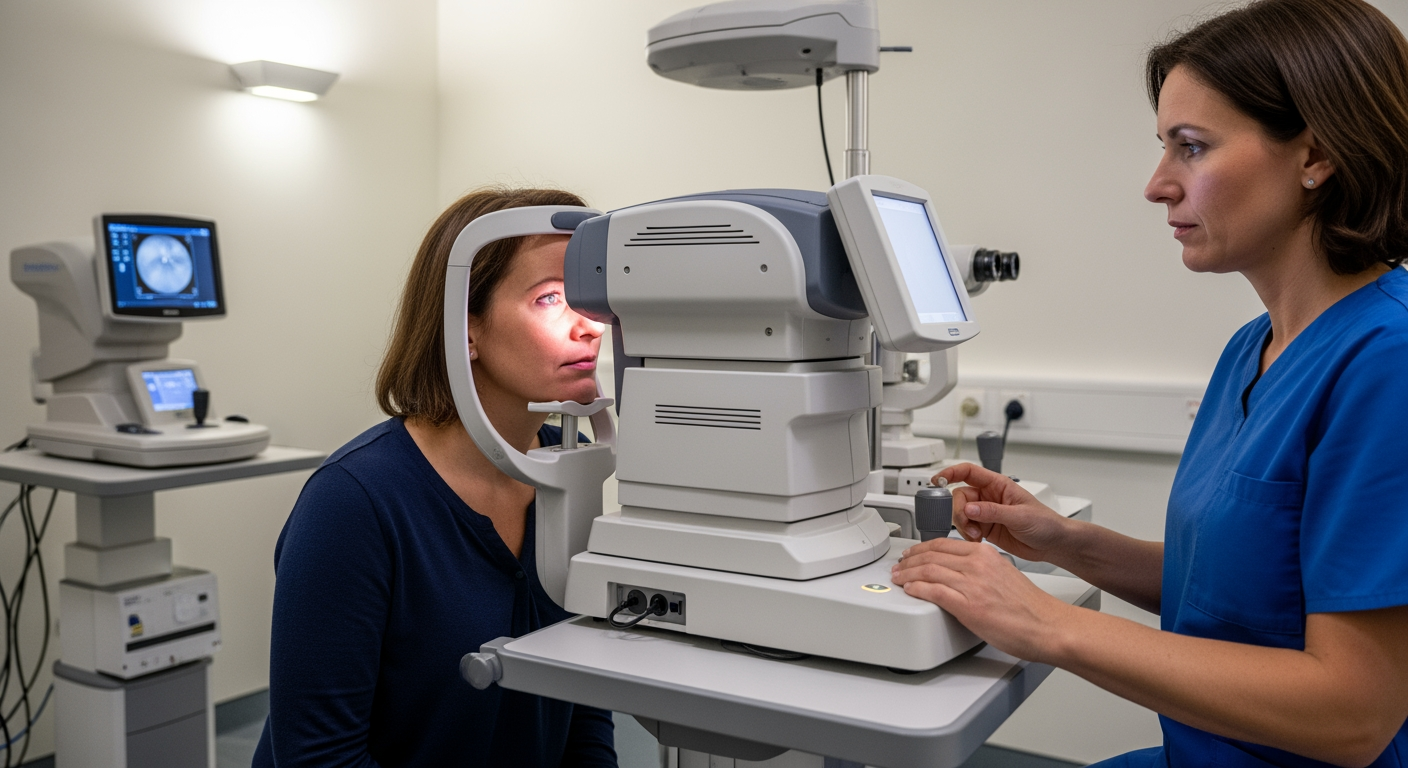
Glaucoma testing can feel mysterious if you’ve never had it before: Will it hurt, how long will it take, and what are doctors actually looking for? If you’re scheduling a first evaluation, monitoring an existing diagnosis, or simply trying to protect your long-term vision, understanding the visit helps you show up prepared and less anxious. These tests matter because glaucoma often develops with few noticeable symptoms early on, and the goal of testing is to detect risk, confirm findings, and track change over time. During the summer months—when schedules and travel can get hectic—it’s especially helpful to know what to expect so you can plan your appointment and any post-visit downtime if your eyes are dilated.
Most glaucoma evaluations combine several quick measurements rather than relying on one “perfect” test. Your clinician is typically building a complete picture: eye pressure, optic nerve appearance, peripheral vision, and the thickness/shape of key eye structures. The exact set of tests depends on your history, risk factors, and prior results.
If you’re looking for glaucoma testing in Loganville, GA, it can help to know that many results are compared over time, so consistency—showing up for follow-ups and doing the same types of tests—can be just as important as the first visit.
What You Need to Know First
- Glaucoma testing is a bundle of tests, not a single exam—expect several short steps that together assess risk and progression.
- Most tests are quick and noninvasive; some require bright lights, a chin rest, or dilating drops.
- Results are often trend-based, meaning your clinician compares today’s findings to prior visits to spot meaningful change.
- Eye pressure is only one piece; optic nerve health and visual field results are critical parts of the evaluation.
- Plan for dilation if recommended—bring sunglasses and consider arranging a ride if you’re sensitive to blurry vision afterward.
How a Glaucoma Evaluation Is Put Together
A glaucoma-focused visit typically follows a structured flow. Your clinician is looking for signs that the optic nerve is under stress and whether any vision changes match that pattern. While each practice has its own workflow, glaucoma testing often includes:
- History and risk review (family history, age, past eye injuries, steroid use, medical conditions, and prior eye procedures).
- Vision check to document your baseline visual acuity and any changes since the last visit.
- Eye pressure measurement (tonometry) using a gentle device that measures intraocular pressure. Some methods use a brief puff of air; others use a numbing drop and a light touch.
- Gonioscopy (in some cases) to examine the eye’s drainage angle with a special lens—helpful for determining glaucoma type.
- Optic nerve evaluation using magnification and bright light to assess the optic nerve’s appearance.
- Imaging (often OCT) to measure the thickness of the nerve fiber layer and other structures that can change with glaucoma.
- Peripheral vision testing (visual field) to check for functional vision loss that may not be obvious in daily life early on.
- Corneal thickness measurement (pachymetry) because corneal thickness can influence how eye pressure readings are interpreted.
Why Timing and Follow-Ups Matter for Long-Term Vision
The biggest practical implication of glaucoma testing is that it’s often a monitoring process. Even when results look stable, your clinician may recommend repeat testing because glaucoma-related changes can be subtle and gradual. Waiting too long between visits can make it harder to determine whether a difference is real change or normal test-to-test variability.
Other real-world considerations include:
- Time in office: A comprehensive glaucoma visit can take longer than a routine check, especially if you’re doing imaging and visual field testing.
- Temporary blur/light sensitivity: If dilation is used, near vision and light sensitivity may be affected for a few hours.
- Decision-making: Treatment recommendations (if needed) are usually based on the whole pattern—pressure, nerve appearance, imaging, and field testing—rather than one number.
- Cost planning: Coverage and out-of-pocket costs vary by plan and by which tests are medically indicated; it’s reasonable to ask what testing is expected at your visit.
Common Missteps That Make Testing Less Accurate
- Skipping prior records: If you’ve had glaucoma testing elsewhere, bring past results when possible so trends are easier to interpret.
- Rushing the visual field: Visual field testing depends on focus and pacing—take a breath, ask for a break if needed, and don’t worry about “getting a perfect score.”
- Not mentioning steroid use: Prescription, inhaled, nasal, or topical steroids can affect eye pressure in some people—tell your clinician what you use.
- Forgetting family history: A parent or sibling with glaucoma can change how your risk is assessed.
- Driving without a plan after dilation: Many people can drive, but some feel too blurry or light-sensitive—plan ahead if you’re unsure.
- Assuming pressure alone rules glaucoma in or out: Some people have optic nerve damage with “normal” pressure, and others have higher pressure without damage.
How to Prepare for a Smooth Glaucoma Testing Visit
- Bring a list of current medications (including eye drops) and any medication allergies.
- Write down eye symptoms you’ve noticed, even if they seem minor or intermittent.
- Bring glasses/contact lens information; ask if you should wear contacts to the appointment.
- Arrive a little early in case multiple tests are scheduled.
- Eat and hydrate normally unless you were told otherwise.
- Bring sunglasses for after the visit if dilation is planned.
- Ask what follow-up schedule is recommended and which tests will be repeated next time.
What Most People Miss About “Normal” Results
In practice, we often see people feel relieved when a single result looks “normal,” but glaucoma testing is most useful when it’s consistent and repeatable. A clean-looking test today can still be valuable mainly as a baseline—something future tests can be compared against—especially if you have risk factors or borderline findings.
When to Seek an Eye Doctor’s Help Sooner
Schedule an evaluation if you’ve been told you have elevated eye pressure, suspicious optic nerve findings, or a family history of glaucoma. You should also ask for glaucoma-focused testing if you notice changes that concern you, such as:
- Progressive difficulty with side vision (peripheral awareness)
- Unexplained changes in vision that don’t improve with a new glasses prescription
- Eye pain, sudden vision changes, or severe headache with visual symptoms (seek urgent medical care—do not wait for a routine appointment)
If you’re already under care, contact your eye doctor if your symptoms change, you can’t tolerate prescribed drops, or you’re missing doses due to side effects or cost—there may be alternatives to discuss.
Frequently Asked Questions
Does glaucoma testing hurt?
Most parts of the visit are not painful. Some tests use bright lights or require you to keep your eyes steady, which can be mildly uncomfortable, but numbing drops are used when needed.
How long does a glaucoma-focused appointment take?
It varies based on which tests are performed and whether your eyes are dilated. If visual field testing and imaging are included, plan for a longer visit than a routine eye check.
Why do I need more than one test?
Different tests measure different things—pressure, optic nerve structure, and how well you see in your peripheral vision. Using multiple tests helps your clinician confirm findings and monitor changes over time.
What should I do if I’m anxious about the visual field test?
Tell the technician you’re nervous and ask for instructions before starting. It’s common to need a learning curve; taking short breaks and staying relaxed can improve reliability.
If my eye pressure is normal, can I still have glaucoma?
Yes. Some people can develop optic nerve damage with pressures that fall in a typical range. That’s why optic nerve evaluation, imaging, and visual field testing are important parts of the overall assessment.
Moving Forward
Glaucoma evaluations are designed to be thorough, repeatable, and focused on protecting your vision over time. Knowing the steps—pressure measurement, optic nerve assessment, imaging, and peripheral vision testing—helps you prepare and get more out of each visit. If you’re new to testing, remember that many results are most meaningful when compared across multiple appointments. Bring your questions, share your history, and don’t hesitate to ask what your follow-up plan is and why.
Discover how we can help you achieve your goals.