
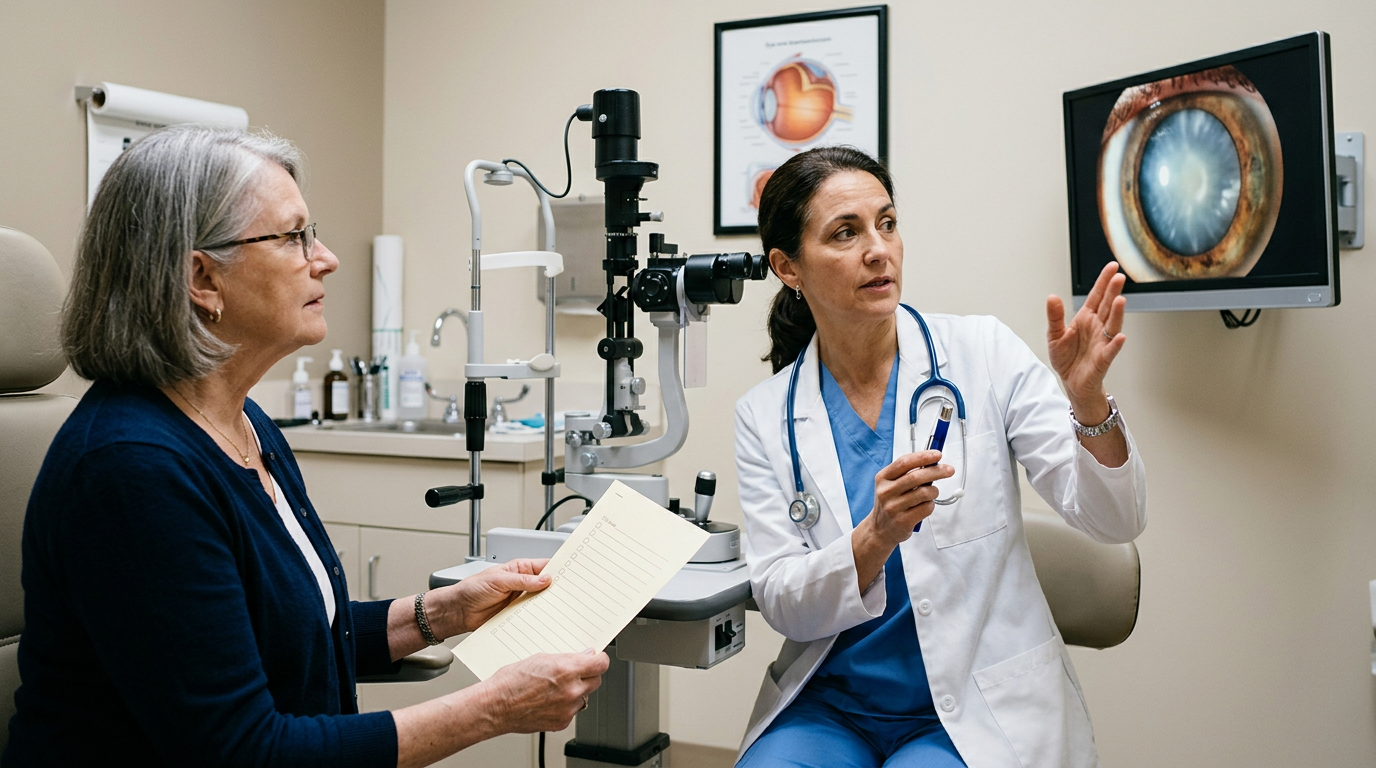
Planning a cataract consultation can feel surprisingly high-stakes: you want clearer vision, but you also want to understand exactly what’s being recommended and why. This FAQ is for people who’ve been told they may have cataracts (or suspect they do) and want to show up prepared, confident, and ready to make decisions at their pace. A good visit is more than “yes/no surgery”—it’s about confirming what’s causing your symptoms, reviewing options, and matching a plan to your daily life. As fall routines ramp up, it’s a practical time to sort out vision changes that make driving at dusk, reading, or screen time more frustrating than they should be.
Bring your questions, your current glasses (if you wear them), and a short list of the activities you most want to do comfortably—like night driving, reading, or hobbies that need sharp detail. If you’re looking for a local place to start, you can review options for a cataract consultation in Greensboro, GA.
The Essentials Before Your Visit
- Expect a diagnosis check first: The goal is to confirm cataracts are the main reason for your vision changes (and not another eye condition).
- Ask how your cataract affects daily tasks: Decisions often hinge on function—glare, night driving, reading, and contrast—not just “how cloudy” the lens looks.
- Lens choices matter: If surgery is discussed, ask what intraocular lens (IOL) options fit your priorities and whether glasses may still be needed.
- Medication and health history are relevant: Bring a medication list and mention diabetes, blood thinners, or prior eye procedures.
- Know what the timeline looks like: Clarify next steps, follow-up schedule, and what you can/can’t do around the procedure timeframe.
What a Cataract Evaluation Typically Covers
A cataract is clouding of the eye’s natural lens. During an evaluation, the clinician generally checks your vision, examines the lens and other eye structures, and looks for other causes of blur or glare. You can also expect a conversation about symptoms—especially problems with night driving, halos, glare, reading endurance, and needing brighter light.
Common testing components may include (the exact set varies by patient and clinic):
- Visual acuity and refraction: checks how clearly you see and whether a glasses prescription change explains the blur.
- Pupil dilation and slit-lamp exam: allows a closer look at the lens to confirm cataract changes and assess their type and density.
- Glare testing (often): helps quantify how much headlights/sunlight or bright environments reduce vision, even if the eye chart looks “okay.”
- Retinal and optic nerve exam: looks for macular degeneration, diabetic eye disease, retinal problems, or optic nerve issues that can also affect vision and surgical planning.
- Eye pressure measurement: screens for pressure-related concerns (including glaucoma risk) that may affect overall eye health.
- Biometry/eye measurements (if surgery is being considered): measures eye length and corneal shape to calculate IOL power and plan astigmatism management.
- Corneal surface/dry eye assessment (as needed): checks for tear-film issues that can cause fluctuating blur and can also affect measurement accuracy.
If surgery becomes part of the discussion, the visit may include measurements that help plan an artificial lens (IOL). The key point: the appointment isn’t only about “do you have cataracts?” It’s also about whether the cataract explains your symptoms and what options align with your goals and eye health.
Why Your Questions Can Change the Plan
The answers you get can affect comfort, cost planning, and expectations. For example, some lens options aim to reduce dependence on glasses, while others prioritize crisp distance vision with reading glasses still needed. Timing also matters: waiting may be reasonable if symptoms are mild, but delaying too long can sometimes make day-to-day life harder—like feeling less confident driving at night or struggling with screens and fine print.
Clear communication in your cataract consultation helps you understand trade-offs, what results are realistic for your eyes, and what follow-up care typically involves.
Question Checklist: What NOT to Skip
- Don’t leave without a plain-language diagnosis: Ask what findings point to cataracts versus other causes of blur (dry eye, refractive error, retinal issues).
- Don’t assume “one lens fits all”: Ask which IOL types are being considered and why they fit your lifestyle.
- Don’t ignore glare specifics: Mention halos, oncoming headlights, or sunlight sensitivity—these details help guide recommendations.
- Don’t forget your medication list: Some medications and health conditions affect planning and aftercare.
- Don’t leave the follow-up vague: Ask how many visits are typical and what symptoms should prompt a call.
- Don’t under-share your priorities: Tell them what you care about most—night driving, reading, golf, sewing, computer work, etc.
Your Smart Prep Plan for the Appointment
- Write down 3–5 symptom examples: “Headlights starburst,” “need brighter light to read,” “colors look dull,” “glare in big-box stores.”
- Bring current glasses and contacts info: Include your most recent prescription if you have it.
- List medications and allergies: Include over-the-counter drops and supplements.
- Bring medical history highlights: Diabetes, autoimmune conditions, prior eye surgery, or eye injuries are worth mentioning.
- Plan for dilated eyes if advised: Consider arranging a ride if you’re sensitive to light after dilation.
- Prepare decision questions: Ask about lens options, expected recovery milestones, and what “success” means for your goals.
Professional Insight: The Question That Unlocks Clarity
A useful question many patients ask is: “Here’s the specific task I’m struggling with (night driving, reading labels, seeing street signs)—what’s the most likely reason this is happening in my eyes, and what did today’s exam show?” It keeps the conversation grounded in your symptoms and the exam findings, which helps you understand whether cataracts are the main driver or whether another issue also needs attention.
When to Seek Help Sooner Rather Than Later
Schedule an evaluation if vision changes are affecting safety or independence, such as:
- Night driving feels unsafe due to glare, halos, or poor contrast
- Frequent prescription changes that don’t seem to “stick”
- Difficulty reading even with brighter light or updated glasses
- Colors look faded or you notice a persistent “film” over vision
- One eye seems significantly worse than the other
Practical symptom clues (not a diagnosis):
- Often cataract-like: gradual blur, increased glare/halos (especially at night), needing more light to read, colors looking dull or yellowed, trouble with contrast.
- Often dry-eye-like: burning/gritty feeling, tearing, fluctuating blur that improves with blinking or lubricating drops, worse with screens, wind, or air conditioning.
- Often retina/optic-nerve-related red flags: distortion (straight lines look wavy), a dark/gray “curtain,” a new blind spot, sudden major change in vision, or a sudden shower of floaters with flashes.
Quick decision guide:
- Call urgently / seek urgent medical attention now for sudden vision loss, severe eye pain, a curtain/shadow over vision, new flashes with many new floaters, or new distortion—especially in one eye.
- Schedule a routine cataract evaluation for gradual blur, increasing glare, needing brighter light, or trouble with daily tasks that’s been building over weeks to months.
- Ask about dry eye evaluation if blur is intermittent and paired with irritation, burning, or symptoms that worsen with screens or improve with blinking.
If you have sudden vision loss, severe eye pain, or new flashes/floaters, seek urgent medical attention. (Availability and appropriate care settings can vary, so confirm where to go based on your situation.)
Your Cataract Visit Questions, Answered
What questions should I bring to the appointment?
Ask what’s causing your symptoms, how advanced the lens clouding appears, whether anything else is contributing (like dry eye), what options exist (including timing), and what changes you can realistically expect after treatment.
How do I know if surgery is the right next step for me?
A common decision point is function: if glare, blur, or reduced contrast is limiting daily activities (driving, reading, work, hobbies), it’s reasonable to discuss whether surgery would likely improve those specific problems for your eyes. Also ask what else could limit vision even after surgery (for example, macular disease), since that affects expectations.
Will I still need glasses after cataract surgery?
Some people still use glasses for reading, distance, or both depending on the lens selected, the health of the eye, and personal visual goals. Ask how each lens option typically affects the need for glasses in situations that matter most to you.
What should I bring to the visit?
Bring your glasses/contacts information, a medication list, any relevant medical history, and a short list of symptom examples and priorities (like night driving or reading). This helps the clinician connect exam findings to your real-life needs.
How long does the whole process usually take?
Timing varies based on testing, scheduling, and your individualized plan. During your visit, ask what the expected sequence is—from evaluation to any pre-op measurements, the procedure (if recommended), and follow-up appointments.
Moving Forward with Confidence
A cataract consultation is your chance to connect symptoms to a clear plan, understand lens options, and set realistic expectations for daily-life improvements. The best visits are the ones where you share specific goals and leave with a step-by-step next move. If you’re unsure what to ask, use the checklists above and bring them with you. Getting answers in plain language can make the entire process feel far less intimidating.
Get in Touch
Fill out our quick form and we’ll follow up as soon as possible during normal business hours.